Get Your Knuckles Down….

Instruction

Get Your Knuckles Down


One common problem I see with beginning golfers is topping golf shots.  Here’s why….

When a golf ball is topped one of three things happened:

  1. You have come out of your posture through the swing and you are now above the ball.
  2. The bottom of your swing has moved behind the ball and by the time you get to the ball, you are above it.
  3. Your hands are not ahead of the ball at impact.

Try this…..

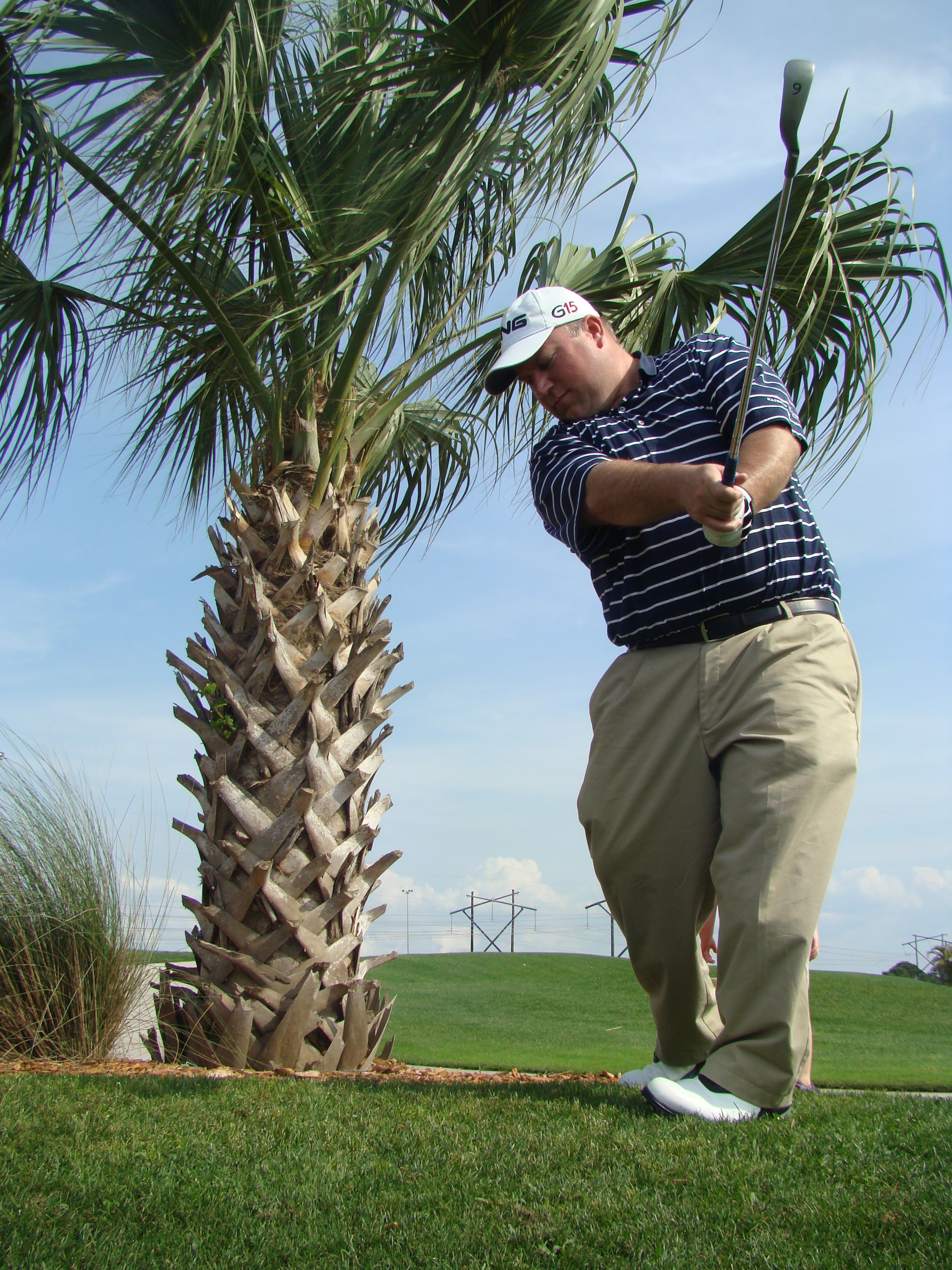
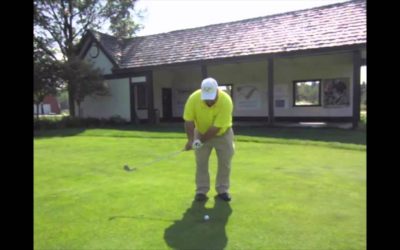
Through impact, feel like you turn your bottom hand knuckles to the ground at impact.  Make sure your hands are ahead of the ball at the same time.  These two things should get you hitting the ball better.

Mike Fay

Mike Fay

PGA Director of Instruction

With over 30 years of teaching experience, it's easy to see why Mike has become a leader in the world of golf instruction. Everything from cutting edge social networking techniques to having his own podcast, Mike has helped to change the face of teaching golf.  He currently is the Director of Instruction at Walnut Creek Country Club in South Lyon, Michigan.

Email:  [email protected]

Instruction Archives

TEAM MFG BLOG

Subscribe

Never miss a new post, article, or video!
Subscribe to our newsletter Chip Shots!

How Your Sand Wedge Works

Instruction

How Your Sand Wedge Works


Let’s start with a little history….

The first golf wedge to be played was the pitching wedge, also known as a jigger. This was the best option golfers had for difficult shots until the invention of the sand wedge.The sand wedge was invented by Gene Sarazen after flying in Howard Hughes‘ private plane. He built his first prototype in 1931 and started carrying it in his bag in 1932. Before his invention of the sand wedge, many golfers had a difficult time getting their balls out of the bunker.

Gene Sarazen began to win tournaments in 1935 with a new club he had invented that was specialized for sand play. He is hailed as the inventor of the sand wedge. However, history goes about 3 years further back than that. “Spoon” clubs offered varying degrees of loft and allowed players to scoop their ball out of sand traps and deep rough. As manufacturers became more and more innovative with club design, new types of wedges appeared. Some had concave faces, others featured deeply grooved faces, but not all of these designs conformed to USGA and R&A regulations, and many were banned. With the concave-faced wedge having been outlawed in 1931, Sarazen designed his sand wedge with a straight face. Another modification that he made was to add extra lead to the front edge of the club face, allowing it to cut through the sand more smoothly. After he won the 1932 British and U.S. Opens with the help of his new club, its popularity quickly grew.

Well now that we have a little history on how Gene Sarazen changed the game of golf forever.  Lets move on to talk about what that plane ride showed Mr. Sarazen how a “rutter” on the bottom of a wedge would help golfers all around the world play better.

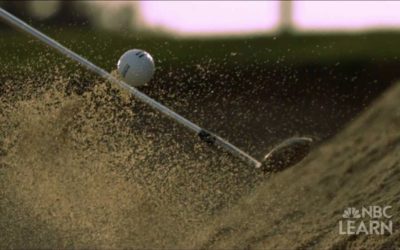
In golf, Bounce, or bounce angle, is a term used to describe the angle inscribed by the leading edge of a golfing iron (particularly a wedge), the sole of the club, and the ground. In plainer terms, bounce angle is an indication of how much the sole, or bottom-most part, of the club head lifts the leading edge. A high bounce angle (angles of 12-15o are not uncommon) indicates a sole which lifts the leading edge significantly, whereas a club with little or no bounce allows the leading edge to contact the ground without interference.

The purpose of introducing bounce into club head design is to control how easily wedges, with their steep angles of attack, penetrate the ground under the ball. A low- or zero-bounce club has a streamlined profile, and the sharp leading edge of the club will tend to cut into the ground readily. When this is undesirable, the use of a club with more bounce will cause the sole of the club to impact first, keeping the wedge from digging into the surface by causing it to “bounce” across the surface instead.

In practical terms, lower bounce wedges are advised for thin grass and tight lies, whereas those with more bounce are generally employed in deep rough or sand.

Now you know the bounce is on the bottom of your wedge.  How do you use it correctly-or-incorrectly?

Here are some key points about club address position that can help you:

  • The more the face is open, the more the bounce is exposed.
  • Getting the toe of the club off the ground and opening the face exposes the bounce even more.
  • The opposite is true for your heel of the club.  If the toe is in the ground, no bounce is exposed.
  • If the toe is in the ground with the face open, 50% of the bounce is exposed.

The above are the four different set up positions for your short game shots.  Here are some situations that might help you determine which position to do when:

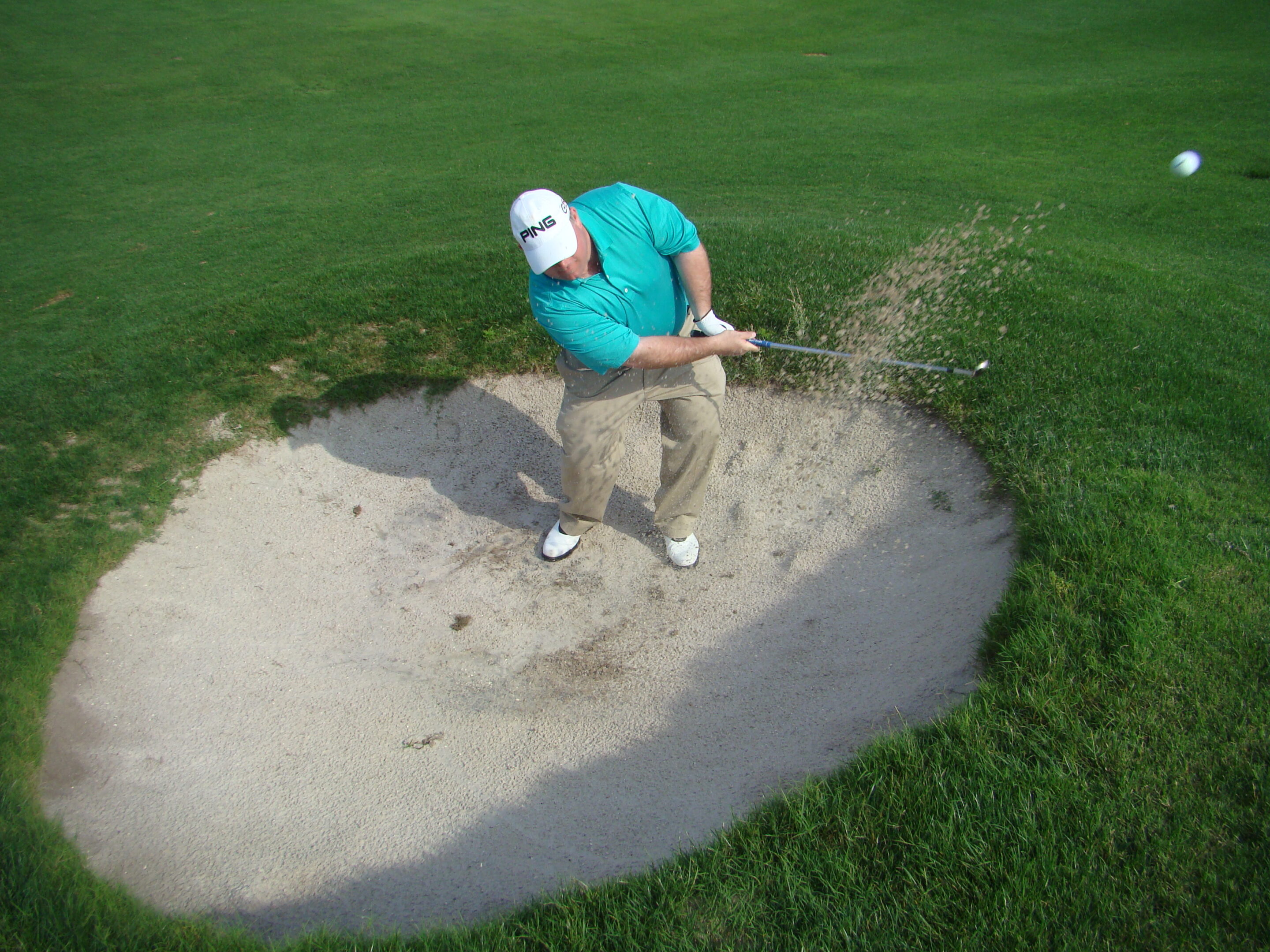
  • In a bunker with a good lie, the face must be open to activate the bounce.  In a bunker with a poor lie, the leading edge of your club must be used to “dig” out the bad lie.  In extreme cases, lowering the heel towards the sand can be used.
  • In a closely mown area, bounce should not be used.  Instead use the toe in the ground method,  this acts like a knife to rip the ball off the turf.
  • In large rough around the green, put the club heel down and adjust for height of the shot.  Open the face more:  worse the lie and higher shot required.

I hope all these tips can help you with your wedge game.  A special thanks to wikipedia for our history lesson.


Mike Fay

Mike Fay

PGA Director of Instruction

With over 30 years of teaching experience, it's easy to see why Mike has become a leader in the world of golf instruction. Everything from cutting edge social networking techniques to having his own podcast, Mike has helped to change the face of teaching golf.  He currently is the Director of Instruction at Walnut Creek Country Club in South Lyon, Michigan.

Email:  [email protected]

Instruction Archives

Squaring The Club Face With HackMotion

Squaring The Club Face With HackMotion

Squaring The Club Face With HackMotion   In this video Mike discusses the importance of understanding wrist flexion and extension and the relationship it builds to squaring the club face. Mike is a brand ambassador for HackMotion.  To save on the shipping enter...

read more
Wedge Distance Control

Wedge Distance Control

Wedge Distance ControlOne of the things I am often asked is:  "How do I get better distance control on wedge shots?" At Boyne Mountain Resort we have installed Northern Michigan's first Wedge Range.  This area is specifically designed for hitting wedge shots.  There...

read more

TEAM MFG BLOG

Subscribe

Never miss a new post, article, or video!
Subscribe to our newsletter Chip Shots!

Playing Better Golf In The Wind

Playing Better Golf In The Wind


One question that some of my players ask me is….How can I score better playing golf in the wind?

Playing golf on windy days can be challenging, but with these few tips, maybe you can lower your score.

  • Tee the ball lower on into the wind shots, higher on downwind tee shots.
  • Most solidly struck shots are not affected directionally by the wind, so make sure you hit the ball solidly.  Non-solidly struck shots tend to curve more.
  • Set-up is critical to hitting solid shots into the wind.  On shots into the wind, make sure you play the ball slightly back in your stance, close the clubface slightly, and finish your swing low.
  • The wind can affect most shots even pitches, chips, and putts.
  • Aim more for the center of the green on approach shots.
  • It’s difficult to get the ball closer to the hole when it’s windy.  Make putting a priority and make sure you at least two putt greens
  • Greens tend to get faster and harder the more the wind blows.  So adjust your game accordingly.  All shots on the green take longer to stop.

Last of all, embrace playing in the wind.  It can be a challenge but the better you get at it, the lower your score.

Mike Fay

Mike Fay

PGA Director of Instruction

With over 30 years of teaching experience, it's easy to see why Mike has become a leader in the world of golf instruction. Everything from cutting edge social networking techniques to having his own podcast, Mike has helped to change the face of teaching golf.  He currently is the Director of Instruction at Walnut Creek Country Club in South Lyon, Michigan.

Email:  [email protected]

Hit More Fairways

Instruction

Hit More Fairways


One thing that you may have never thought about when you set up to the tee….Where do I place my ball?  I know, most of you know that it goes between the markers and you have a couple of club lengths behind it.  But you don’t know this little secret to hitting more fairways.

Place the ball on the side of the tee box where you have the most trouble on the hole.  This way, you aim away from the trouble and find the fairway.  Try it, it works!

Mike Fay

Mike Fay

PGA Director of Instruction

With over 30 years of teaching experience, it's easy to see why Mike has become a leader in the world of golf instruction. Everything from cutting edge social networking techniques to having his own podcast, Mike has helped to change the face of teaching golf.  He currently is the Director of Instruction at Walnut Creek Country Club in South Lyon, Michigan.

Email:  [email protected]

Instruction Archives
Squaring The Club Face With HackMotion

Squaring The Club Face With HackMotion

Squaring The Club Face With HackMotion   In this video Mike discusses the importance of understanding wrist flexion and extension and the relationship it builds to squaring the club face. Mike is a brand ambassador for HackMotion.  To save on the shipping enter...

read more
Wedge Distance Control

Wedge Distance Control

Wedge Distance ControlOne of the things I am often asked is:  "How do I get better distance control on wedge shots?" At Boyne Mountain Resort we have installed Northern Michigan's first Wedge Range.  This area is specifically designed for hitting wedge shots.  There...

read more

TEAM MFG BLOG

Subscribe

Never miss a new post, article, or video!
Subscribe to our newsletter Chip Shots!
Short Putt Drill

Instruction

Short Putt Drill


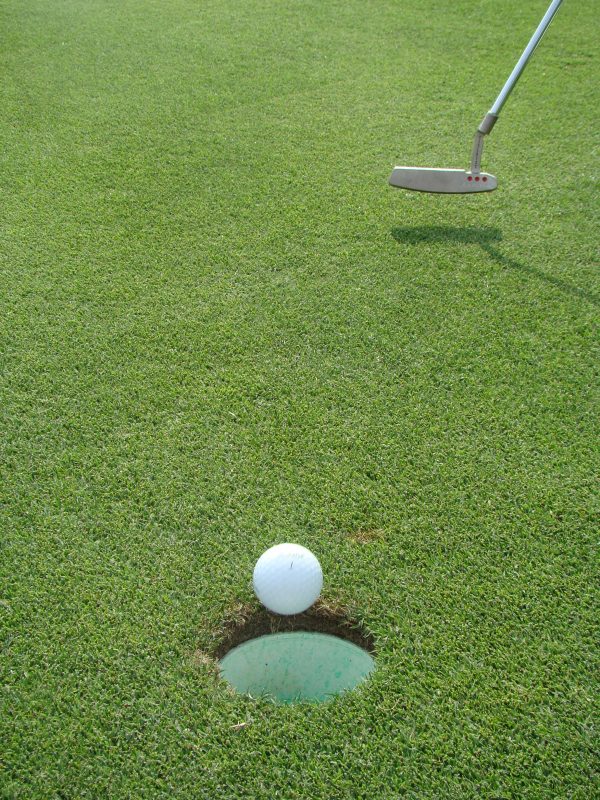
I started doing this drill back in 1998 while playing on the NGA Hooters Tour.  In fact I remember where, it was Sikeston, MO at The Boot Heel GC.  Ever since then, I always go back to this drill to keep my putting sharp.

Did you know that PGA Tour players make about 98% of their three footers?  Also, believe it or not, they only make about 53% of their six footers.  Amazing huh!  Most people would think way more would be made but as you know TV coverage only shows the players making putts, not the players who are not close to the lead.  With all that being said, here’s what I did to become a good putter.  Maybe it will help you too.

Set-Up

Here’s what you need:  putter, many balls, measuring tape, and 9-12 tees.

Take the measuring tape on the putting green and measure three feet from the hole on three different sides of the hole.  Try to make it and uphill putt, downhill putt, and a sidehill putt.  Next move back from the hole to six feet and do the same thing on three different sides.  If you really have time to work on it I went even farther out:  3ft, 6ft, 9ft, 15ft.

Next, take as many balls as you would like and putt from your tees.   I usually hit my shag bag of balls (80) from each location.  Even if you have a few minutes at each station around the hole you can find out some cool things about your putting.  Things like:  which putt (uphill, downhill, sidehill) do I make the most and least.  Then play games with yourself like:  how many balls can I make in a row and so on….

I hopes this helps you make more putts

Keep Rollin’ The Onion

Mike Fay

Mike Fay

PGA Director of Instruction

With over 30 years of teaching experience, it's easy to see why Mike has become a leader in the world of golf instruction. Everything from cutting edge social networking techniques to having his own podcast, Mike has helped to change the face of teaching golf.  He currently is the Director of Instruction at Walnut Creek Country Club in South Lyon, Michigan.

Email:  [email protected]

Instruction Archives

Squaring The Club Face With HackMotion

Squaring The Club Face With HackMotion

Squaring The Club Face With HackMotion   In this video Mike discusses the importance of understanding wrist flexion and extension and the relationship it builds to squaring the club face. Mike is a brand ambassador for HackMotion.  To save on the shipping enter...

read more
Wedge Distance Control

Wedge Distance Control

Wedge Distance ControlOne of the things I am often asked is:  "How do I get better distance control on wedge shots?" At Boyne Mountain Resort we have installed Northern Michigan's first Wedge Range.  This area is specifically designed for hitting wedge shots.  There...

read more

TEAM MFG BLOG

Subscribe

Never miss a new post, article, or video!
Subscribe to our newsletter Chip Shots!

Should You Try To Keep Your Head Down?

Should You Try To Keep Your Head Down?


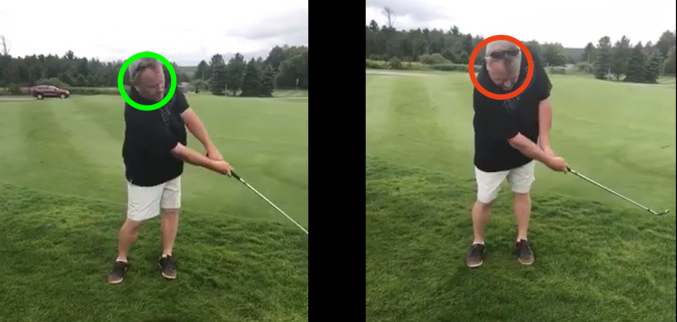
Walk up and down any driving range and you will at some point hear those famous words, “Keep Your Head Down”.   Unfortunately, that advice has never worked.

Golf could be the world’s hardest game to master. What game do you know of where you always could have done better? Perhaps this is the reason we love the game so much. What makes hitting a golf ball so difficult is that the ball doesn’t move . . . YOU do.

The body moving up or down during the swing causes the head to follow. Most people I know have their head connected to their body. LOL

For example, if the body moves up during the backswing, it sets the body above the ball from where it started and vice versa. This sometimes causes golfers to top the ball, hit the ground before the ball, or completely miss it altogether.  It’s important to realize what your are really doing is pulling the golf club away from the ball.

One of the keys to hitting solid golf shots is allowing your body to turn around the spine.  This doesn’t mean your head can’t move, just that you need to move your body around it.

The position of the head at address is important too. The chin should remain high enough to allow the shoulders to turn under it on both the backswing and follow through.

No one ever intentionally kept their head down during a good golf swing – that’s right, no one. Maintaining proper posture throughout the swing keeps your head down. There is no need to lower your head at address. Keep that chin up and turn!

Mike Fay

Mike Fay

PGA Director of Instruction

With over 30 years of teaching experience, it's easy to see why Mike has become a leader in the world of golf instruction. Everything from cutting edge social networking techniques to having his own podcast, Mike has helped to change the face of teaching golf.  He currently is the Director of Instruction at Walnut Creek Country Club in South Lyon, Michigan.

Email:  [email protected]

Pin It on Pinterest